Most jewellery you can clean yourself.
Lukewarm water, a drop of washing-up liquid and a soft brush will do it. Below you will find what to do for each material, and then four things that would ruin the piece instead. If something is badly tarnished, just come by the workshop; at home you will not get any further with it.
How to clean a piece, by what it is made of
Gold takes more than a pearl does. Before you reach for a cloth, look at what you are actually holding.
Gold without stones
Lukewarm water and a drop of washing-up liquid. Go over the piece with a soft toothbrush, rinse it and dry it with a microfibre cloth. That handles most of what settles on gold: soap, hand cream, skin oil.
Tarnished silver
That black layer is not dirt but silver sulphide, the metal reacting with the air. On smooth surfaces a silver polishing cloth from a jeweller takes it off. On detailed pieces polish only the raised parts: the patina in the recesses is what keeps the relief readable, and without it the piece goes flat. And once silver has sat in a drawer for years, a cloth will not do it. Bring it in, most of it I handle while you wait. Only sets of silver tableware and cutlery take longer.
Hard stones
Diamond, sapphire, ruby, amethyst, garnet and tourmaline take the same treatment as bare gold. Run the brush underneath as well, below the stone: that is where most of it collects, and that is why a stone goes dull over time. Do not scrub around the claws, just pass between them.
Pearls and soft stones
Pearl, opal, turquoise, amber, malachite and moldavite are porous or soft. No soaking, no detergent. Wipe them with a damp cloth and let them dry. Put pearls on after your perfume and cream, not before.
Four things that damage jewellery
Toothpaste
The most widely repeated tip on the internet and the fastest way to a scratched piece. Toothpaste contains an abrasive. Gold and silver are soft metals and go dull the first time you use it.
Baking soda and foil
It works on silver, but it takes everything at once, including the patina that belongs in an engraving. On pieces with glued stones or pearls do not use a hot bath at all.
Swimming pools and chlorine
Chlorine attacks gold alloys at the soldered joints. It is not about dulling but about brittleness: a ring worn in a pool for years cracks at the joint. Take it off.
Ultrasonic cleaners at home
A cheap ultrasonic cleaner is fine for glasses. On a piece with a hair crack in the stone (emerald, opal) it will open the crack, and with a loose stone it will wash it into your sink.
When to leave it to me.
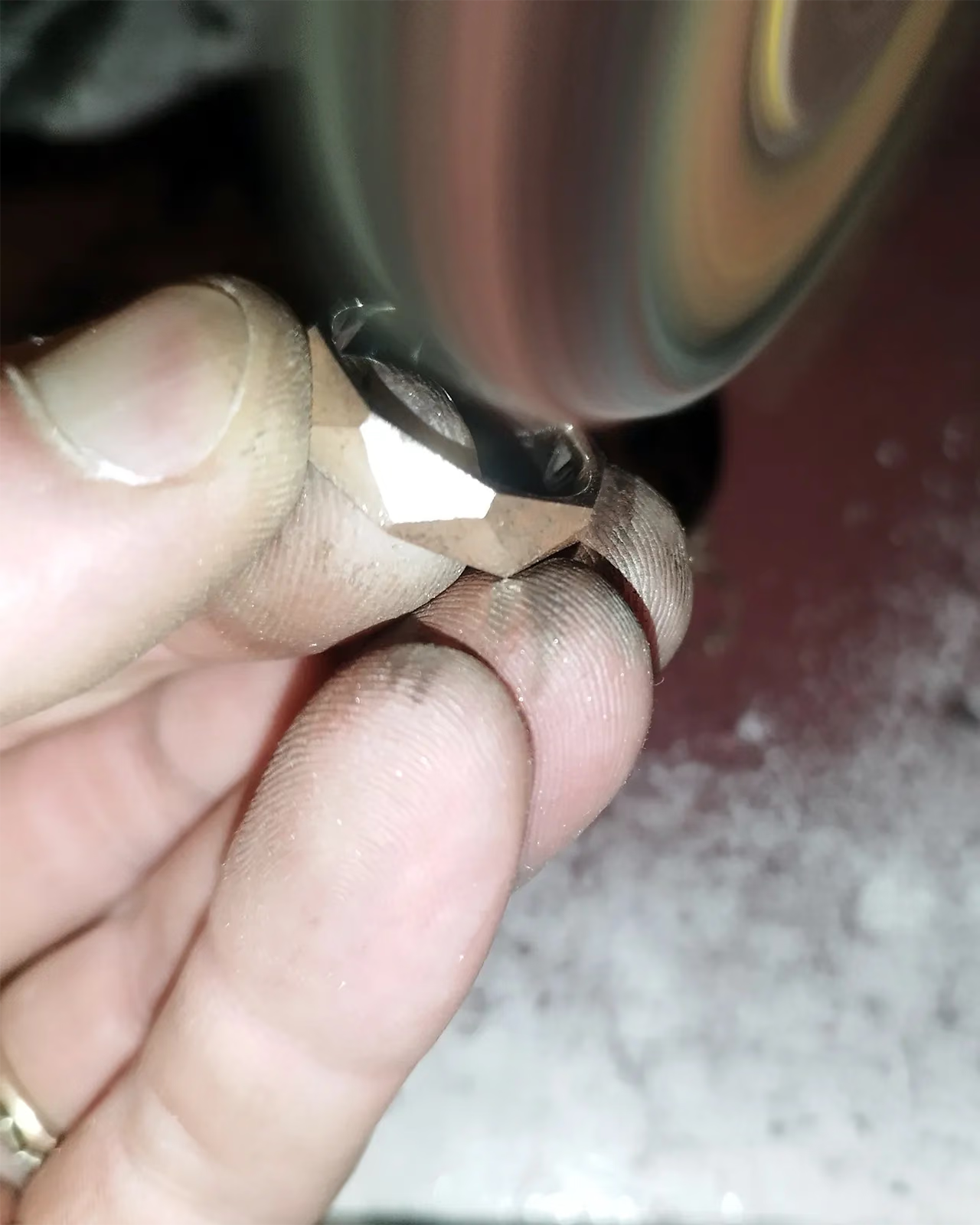
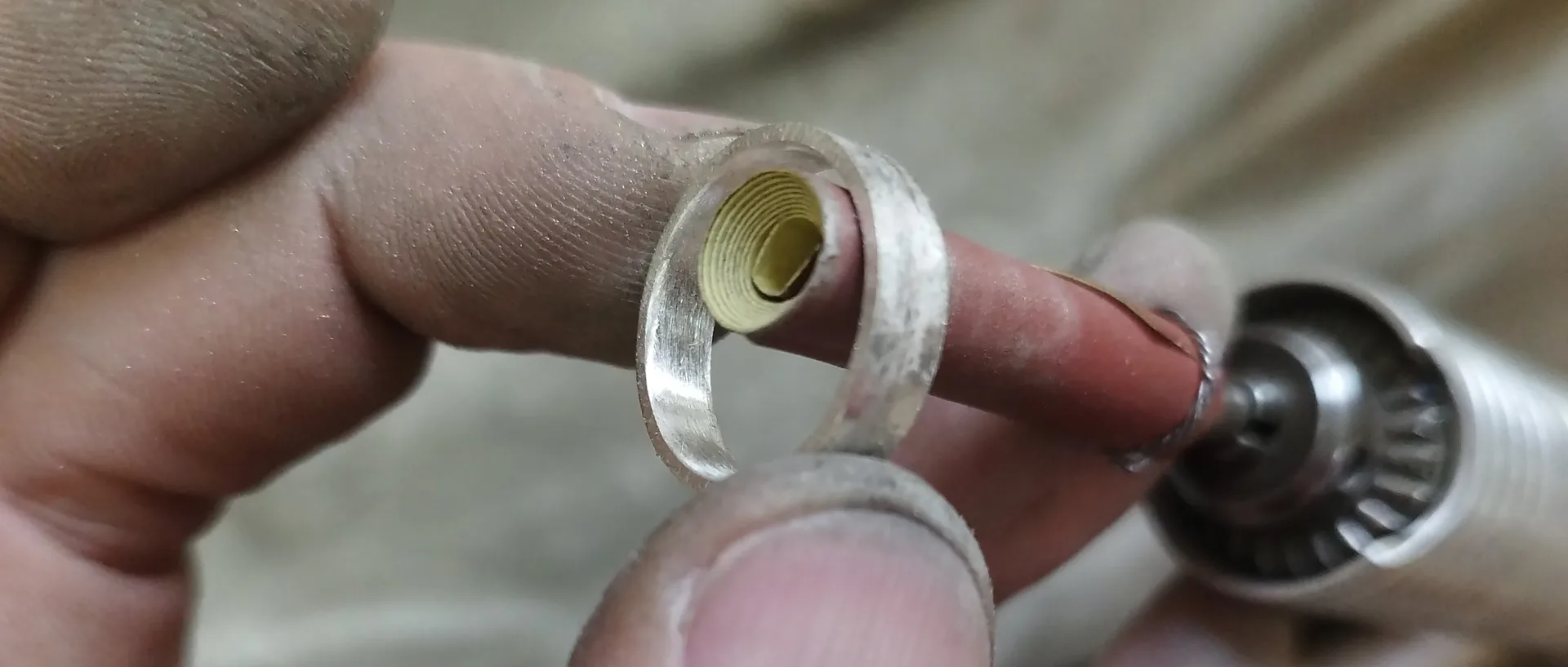
At home you remove what sits on the surface. Deposits under a stone, in the gaps between claws and inside the links of a chain stay put, and those are exactly what takes the shine away. For those I have an ultrasonic bath and a polishing motor, two things that do not belong in a bathroom.
A scratched surface is not a cleaning job but a polishing one. It takes off a very thin layer of metal, so it is not done every month, but afterwards the piece looks the way it did on the day it was made.
Always bring a piece in when a stone feels loose. Cleaning it at home could be the thing that finishes it off. With every cleaning I go over the stone settings and the clasp and tell you what needs tightening before it gets lost.
Please call ahead so I am at the workshop. Cleaning and polishing is usually done while you wait, and I quote the price once I have seen the piece. Pieces I made myself I clean once a year free of charge, for as long as they last.
What people say about my work
4.9 out of 5 from 27 ratings on Google · August 2026
“Great communication, quick and beautiful work. I had my grandmother’s earrings altered and cleaned. Done by the next day.”
Reviews are taken from my Google Business Profile and quoted verbatim; names are shortened to an initial. This is a selection, not every rating. I do not verify them beyond the checks Google itself performs. Read all reviews on Google